Tarek Rahman calls for unified identity amid ‘indigenous’ debate
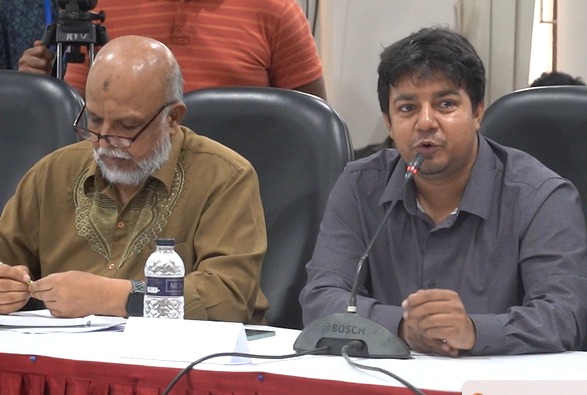
STAFF REPORTER, DHAKA
Tarek Rahman, General Secretary of the A-Am Janata Party, has said that debates over who is “indigenous” and who is not in Bangladesh are creating unnecessary division, and that all citizens should identify as Bangladeshi.
Speaking at a roundtable discussion titled “In the Context of Bangladesh: Indigenous Peoples, Small Ethnic Groups and National Security Concerns” at the CIRDAP auditorium in Dhaka on Saturday (9 August), Rahman said ethnic and community-based distinctions exist across the country, in both plains and hill areas. “What is the problem if everyone is called Bangladeshi?” he said.
The discussion was organised by the CHT Research Foundation and chaired by its chairman, Mehadi Hassan Palash. BNP Standing Committee member Salahuddin Ahmed attended as chief guest, along with other political leaders and academics.
Rahman questioned why some communities might feel threatened by the presence of cantonments in the hill tracts. He said that for some organisations, disputes over the “indigenous” issue had become a means of livelihood. He alleged that certain groups benefited economically from promoting such disputes and named specific communities as recipients of these narratives.
On the quota system for disadvantaged communities, Rahman said he supports its continuation but questioned the distribution of benefits. He said smaller ethnic groups, including Shak, Marma, Mro, Garo and Santal, were not receiving the same share of opportunities as larger groups such as the Chakma. “We do not identify these problems accurately,” he said.
Rahman stated that previous governments had not engaged in disputes over the terms “tribal,” “small ethnic group” or “indigenous,” but claimed the current government had brought these into political focus. He alleged that some non-governmental organisations were contributing to ethnic division and referred to similar situations in India, where NGOs had been accused of promoting religious conversion.
He said no Muslim community in Bangladesh had engaged in religious aggression against ethnic minority groups, but alleged that some communities had been converted to other religions. “Let each community remain in their own religion and identity,” he said.
Rahman called for regular dialogue between hill and plains communities. “We feel comfortable identifying as Bangladeshi; you should also feel comfortable identifying as Bangladeshi. We want to live together with equal rights,” he said.
He added that hill communities face challenges such as electricity shortages, weak mobile networks, and difficult study conditions, which require state intervention. “This care should not be based on ethnic division — it can be provided if there is the will,” Rahman said.